The Payday Trap
It's payday.
Your account balance suddenly looks great.
You feel like you can finally buy the things you've been waiting for.
Then two weeks later: "Where did my money go?"
This is the payday spending cycle.
Give Your Salary a Job
Instead of thinking "I have ₱30,000," think "I have ₱30,000 that needs to cover specific responsibilities."
For example, a ₱30,000 salary might break down as:
- ₱10,000 necessities
- ₱5,000 bills
- ₱4,000 debt payments
- ₱3,000 savings
- ₱5,000 daily spending
- ₱3,000 emergency/flexible funds
The exact numbers will be different for everyone.
The principle remains the same.
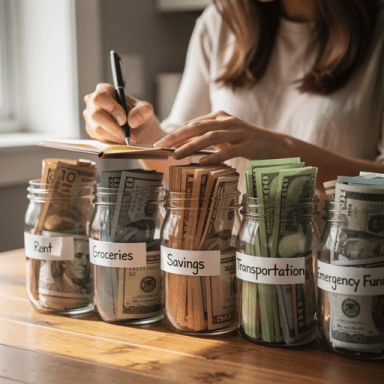
Use Separate Buckets
One simple approach is to separate money by purpose.
Bills
Rent, utilities, subscriptions and other fixed obligations.
Daily Expenses
Food, transportation and other regular spending.
Savings
Money you don't intend to spend immediately.
Debt
Loan and credit payments.
Emergency
Money reserved for unexpected expenses.
Don't Count Your Entire Balance as "Available"
Suppose your account shows ₱25,000.
But you know: ₱8,000 = bills, ₱5,000 = loan payment, ₱3,000 = savings.
Your actual flexible amount isn't ₱25,000. It's ₱9,000.
Thinking this way can dramatically change spending behavior.
What About Loans?
A new loan shouldn't be used to increase your normal lifestyle spending.
If you borrow ₱10,000 and immediately spend it on discretionary purchases, you've effectively converted future income into today's spending.
Before borrowing, identify the actual purpose.
Final Thoughts
Your bank balance tells you how much money you have.
Your budget tells you how much money you can actually spend.
Those aren't always the same thing.
Treat every payday as an opportunity to organize your finances—not an invitation to spend everything.
Was this article helpful?